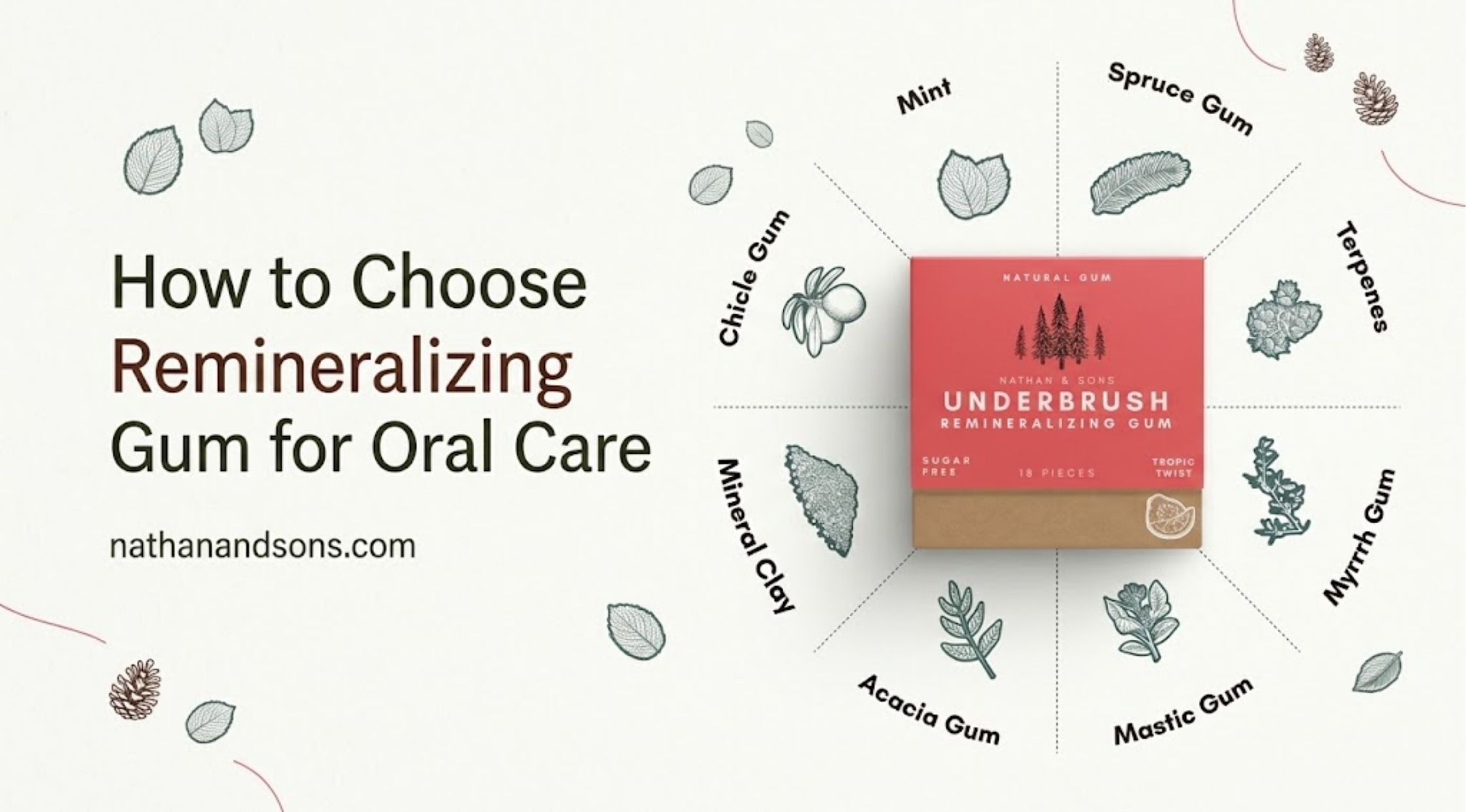
How to Choose Remineralizing Gum for Oral Care
Selecting the right gums for regular oral hygiene.
Selecting the right gums for regular oral hygiene.
Chewing gum can be a more than convenient treat. Ingredients and formulation are important factors to consider when selecting a sugar-free gum, with certain sugar-free gums formulated with oral-care benefits in mind.
When you are looking into the ingredients in gum, the type of remineralizing gum, or if you're studying gum of the Nathan And Sons variety, it is crucial that you understand a few things to make an educated decision.
Sugar-Free Standards, Brand Formulations, & Underbrush Ingredients
Which Sugar Free Gum to Pick
Use the sweetener as your first criterion when choosing an oral care gum. Generally, sugar-free gum is better for the teeth than normal sugary gum, as the acids that can form in the mouth through fermentation of fermentable sugars are not formed with sugar-free gum.
Check packaging to see if sweeteners and ingredients are listed. Sugar-free chewing gum, as well as other products, may contain xylitol or various other sugar alcohols or non-sugar sweeteners.
Take texture, taste, chewing time and ease of use into account as well.
How to Understand Nathan And Sons Gum
When customers are looking for gum with oral health benefits, they can try Nathan And Sons gum.
When considering any product for the gums, check the entire list of ingredients and not just the claims on the label. Review the sweetener, active ingredients, serving directions, allergens and storage instructions.
If you have any special dental concerns, keep in mind that chewing gum should be used in conjunction with proper brushing, flossing, professional dental care, and fluoride exposure, not as a substitute for them.
Exploring Underbrush Gum
To explore underbrush gum, you will need to follow these steps:
Another name that might be used in store to refer the respondents to gum products that contain natural ingredients or oral care is underbrush gum.
When you're looking into a product due to its plant-based ingredients, ensure that you understand what is actually in it and what amount the manufacturer offers of each ingredient.
Not all natural ingredients are a fit for all. Some people may find certain flavors or ingredients in plants to cause sensitivity, so checking the label is essential.
Remineralization Mechanics, Ingredient Comparison, & Oral Hygiene Integration
How Does Remineralizing Gum Work?
Chewing gums that are marketed as “remineralizing gum” generally refer to chewing gum with ingredients that help maintain the mineral conditions of teeth.
Saliva works to remineralize the mouth and the enamel loses minerals in the presence of acids. Saliva production is stimulated by chewing, which can help to neutralize acids and aid the protective mechanisms of the mouth.
Chewing gum, however, cannot be used to repair severely eroded enamel or to reverse existing cavities. If tooth decay or structure damage is present then dental treatment might be necessary.
How to Compare Gum Ingredients
This is an explanation of how to compare ingredients.
Different gums can be compared more easily with transparency of ingredients. Check for clarity in regards to sweeteners, flavorings, active ingredients, and any other chemicals.
If the product is claiming a specific dental benefit, research the evidence for the claim. When the marketing literature explains the intended use of a product, it does not necessarily imply that all the benefits claimed in the marketing literature have been shown in the clinical research.
Allergens, diet restrictions and sensitivities should also be considered before consumption of a new product, as the full label should always be read.
Ways to Incorporate Gum into an Oral-Care Regimen
If after eating, you can't brush your teeth right away, then sugar-free gum can be handy. Chewing causes saliva production and may remove some food particles from the mouth.
Gum is not an alternative to twice-daily fluoride toothpaste brushing and inter-dental cleaning, however.
Gum shouldn't be the sole element of a holistic care plan. However, regular dental exams can help find issues earlier which makes them easier to manage.
Daily Selection Criteria & Mindful Purchasing
Choosing Gum for Everyday Use
Consider where and when you might be chewing gum. When it comes to something after meals you should think about how long it will last and how easy it is to carry around. If you want to know about the ingredients used in oral-care products, focus on the sweetener and active ingredients.
If it is easy to carry and fits into your lifestyle, it might be more functional than one that you don't use.
To compare the gum, underbrush gum, and remineralizing gum from Nathan's ensure you are comparing the products based on the ingredients and their functions.
How to Shop More Carefully
Always look at the current manufacturer's product information before buying: ingredients, serving size, allergens and/or warnings.
Don't assume an oral-care product will replace professional dental care. Seek dental care if the pain in your teeth is ongoing, your teeth are sensitive, the gums around the teeth are bleeding, or the teeth are damaged.
While looking for gum products, go through Nathan and Sons and compare the gum formula depending upon your oral-care requirements.
Conclusion
Final Thoughts on Oral Care Gums
When deciding on a gum for your oral hygiene, it's more than just the taste and the box. Studying the ingredients and uses of Nathan and Sons gum and underbrush gum can be done and remineralizing gum refers to any gum sold that purports to help the mouth's natural mineral balance.
Check the labels for transparency, appropriate sweeteners, and realistic claims. Above all, don't use chewing gum as a substitute for brushing, flossing, fluoride or professional dental care.
Subscribe
You will receive the latest news and updates on your favorite celebrities!
Latest posts

How to Create a Comfortable Gaming Room Setup
The article discusses how to design a comfortable and stylish gaming room setup.



How to Choose Pop Lighting and an Adhesive Wall Sconce
Lights can transform a room's appearance and ambiance.